

Here’s my conversation with journalist Meghan Daum and clinical psychologist Andrew Hartz, Ph.D. on episode 16 of the Open Therapy podcast.
Links for Spotify and Apple Podcast.
Wall Street Journal:
I have a piece out in the Wall Street Journal about actor Christian Bale’s foster care village in California.
Kids in Foster Care Need Stable Relationships
Alternate link here.
Upcoming talks and speaking invitations:
Over the past couple of years, I’ve spoken at Princeton, Cambridge, the University of Missouri, Columbia Business School, Harvard, the University of Austin, Claremont McKenna College, and the American Enterprise Institute, among other institutions. I’ve also spoken at the All-In Summit. These talks have covered luxury beliefs, the psychology of status, social class, the young male crisis, and what my journey from foster care through the military to Yale and Cambridge taught me about opportunity. In 2027, I’m currently scheduled to speak at Stanford on February 2 and at Yale on April 20.
I’m available for additional speaking engagements in 2027, including keynote talks, moderated conversations, and Q&As for companies, universities, conferences, and other organizations.
Main topics include:
Luxury beliefs. How ideas become status symbols and why their consequences differ across social classes.
The psychology of status. How the desire for respect and admiration shapes our beliefs, choices, and behavior.
Family, stability, and opportunity. Lessons from Troubled about growing up in foster care and finding a different path.
Personality and human behavior. Why people respond differently to the same situations, and how personality shapes relationships, work, and decision-making.
If you would like to invite me to speak, please complete this form.
And thank you to everyone who has already invited me to speak or come along to an event. Always a pleasure to meet readers in person.
Links and recommendations:
Walker Percy’s Prophetic Vision by Richard M. Reinsch
Freud in the Rearview Mirror by Roy Baumeister
An Evolutionary Perspective on Socialism by Marc Defant
How Fatherhood Transforms Men: An Interview With Darby Saxbe
Just bury your trash by Alex Chalmers and Rob Wiblin
Gen Z voters hate capitalism — but they’ve barely even seen it by By E. J. Antoni and Annie Heim
Follow me on Instagram here. The platform is less volatile and more chill than Twitter/X, so I post some spicier excerpts from my readings on my IG stories
You can follow me on TikTok here
Three interesting findings:
1. Having good health and a high income correlates with happiness, but only slightly. The only objective predictor of happiness that had a big effect was having abundant vs. negligible social support. People with friends tend to be happy. People who are alone in the world, or who feel lonely, are generally unhappy. (source: Concise Introduction to Social Psychology by Roy Baumeister).
2. Female-breadwinner couples are 36% more likely to separate than male-breadwinner couples, all else equal. Equal-earner couples also face a slightly higher risk, being about 6% more likely to separate than male-breadwinner couples. (source).
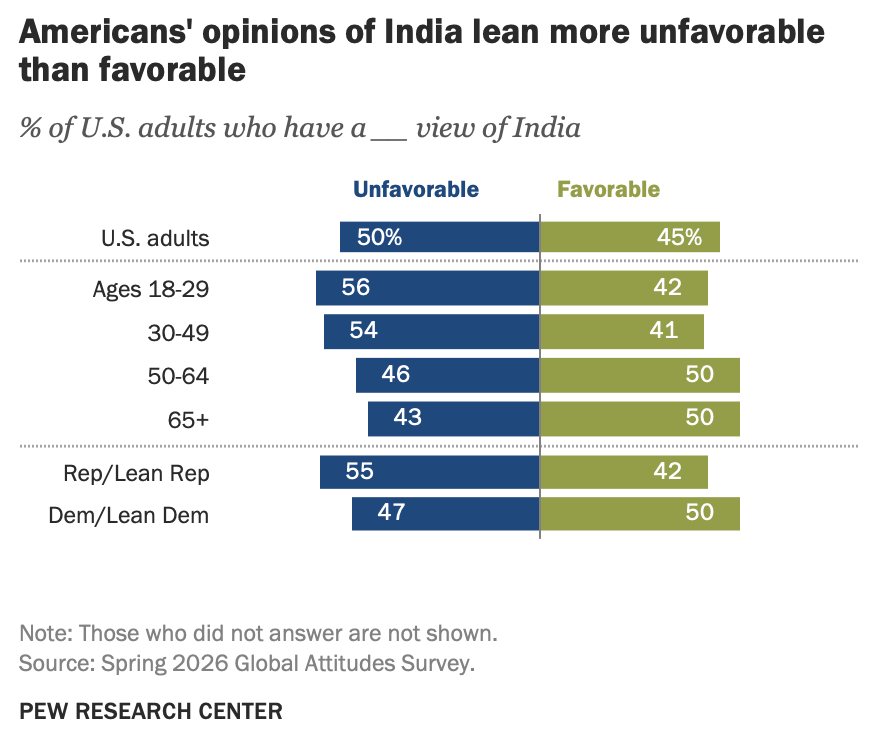
3. Younger Americans have a more unfavorable view of India than older age groups:
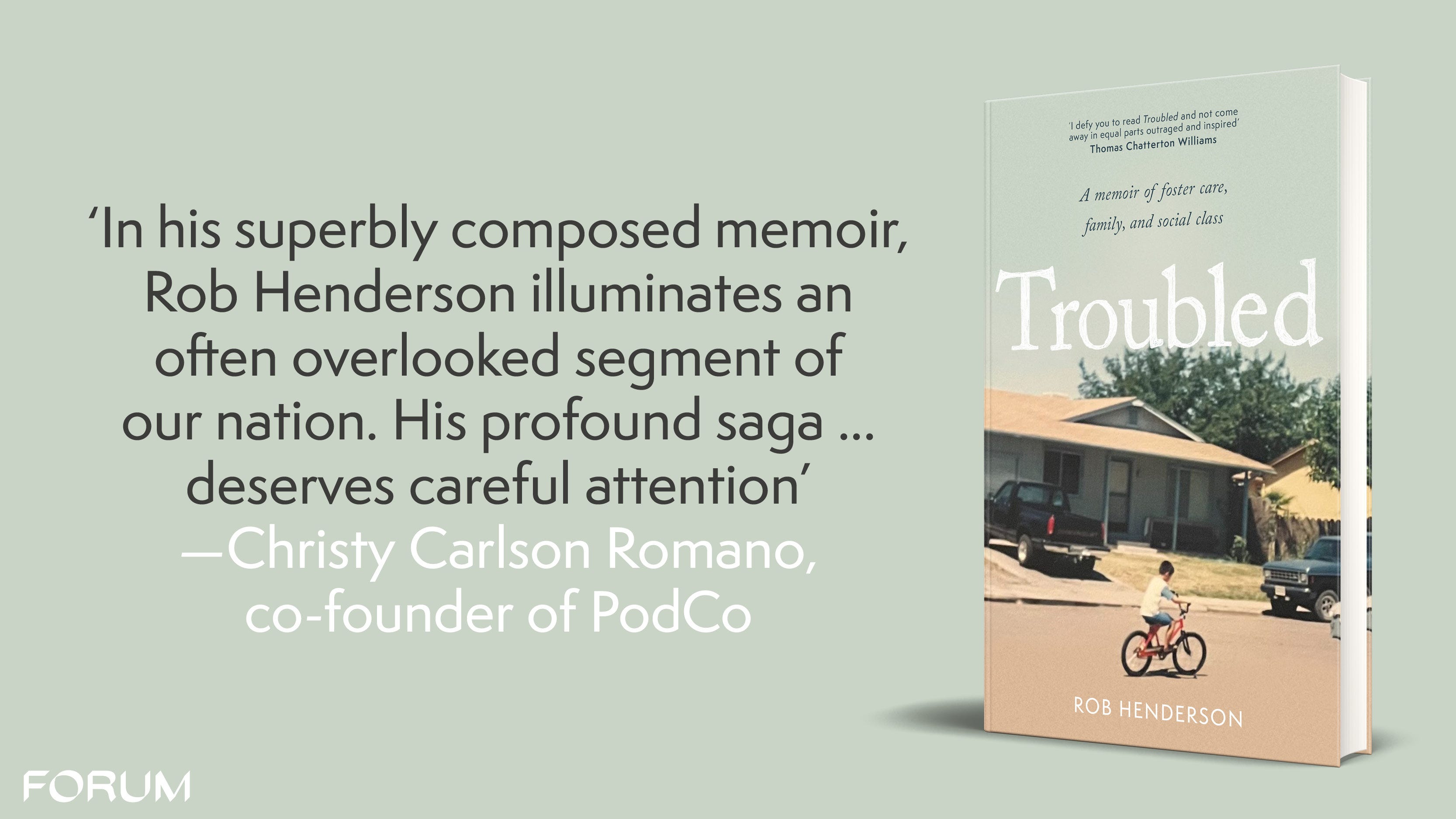
The paperback version of Troubled: A Memoir of Foster Care, Family, and Social Class is now available.
If you have gained any value from this newsletter and want to support my work, please buy a copy today. For yourself. For a friend or a loved one. If you can’t afford it, please support your local library.
Order your copy now:
Audible (I narrated the audiobook myself)
I worked in the mental health system that serves foster kids in AZ. Rob's insights are spot on. Kids don't need services, they need relationships. Unfortunately, it is not easy to find and connect children to caring, consistent adults.
I think your most profound contribution to the discussion on foster care is your theme that "instability can be more damaging than poverty". I predict that in 30 years this will be your greatest contribution to the field.