

As artificial intelligence advances, some are beginning to welcome a future without work. They shouldn’t.
Sigmund Freud had a simple answer to the question of happiness: “Work and love.” Find meaning in what you do and in the people around you, and you are already close to a good life.
Still, it is easy to understand why people want to escape work.
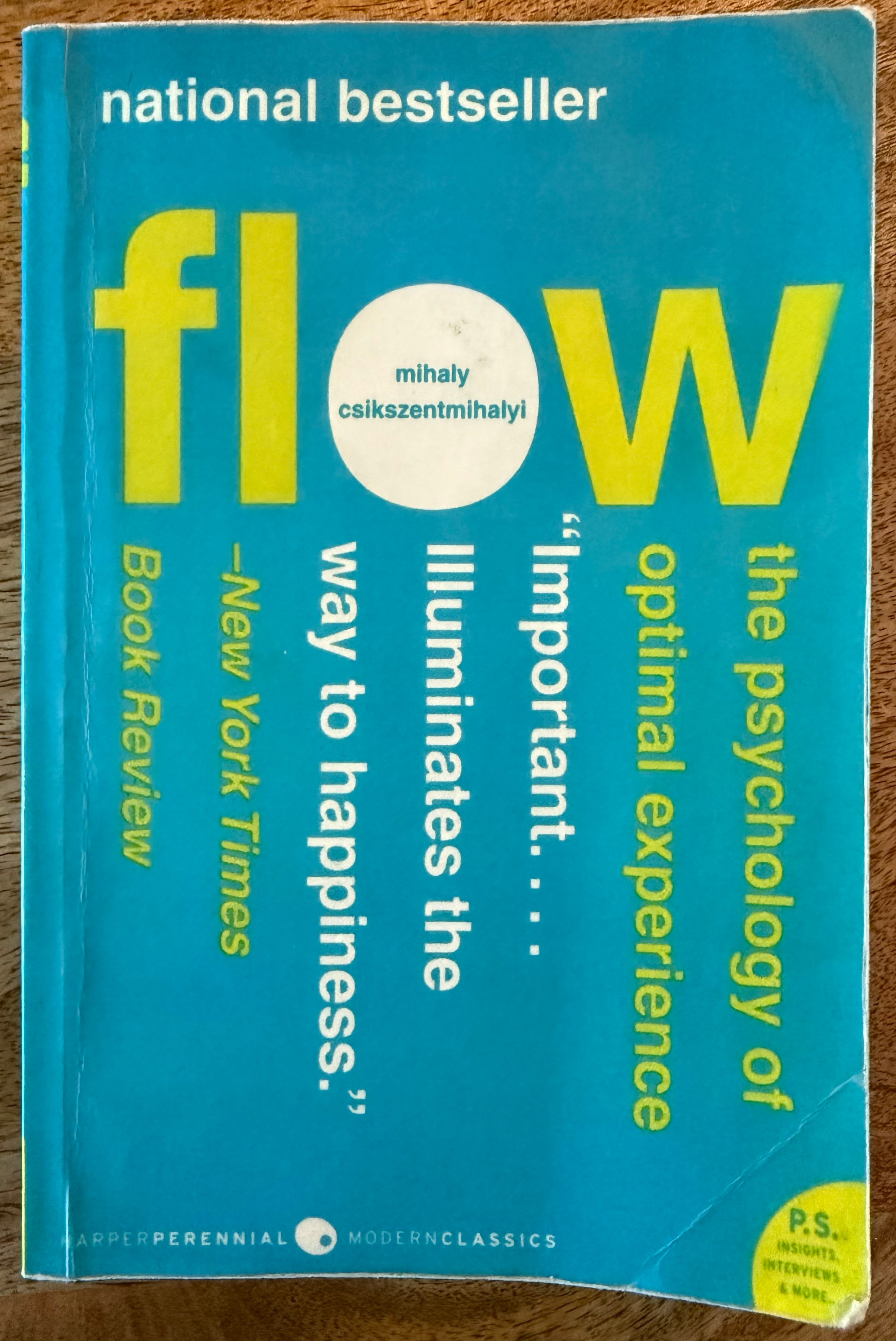
In his 1990 book Flow: The Psychology of Optimal Experience, psychologist Mihaly Csikszentmihalyi described what he called “the paradox of work.”
He reports data indicating that people are more likely to experience “flow” at work than during leisure. Flow is the state of full focus on a task; you lose track of time. When in a flow state, the challenge in front of you matches your abilities such that you feel both effective and competent.
Csikszentmihalyi points out that when people at their jobs were actually working, which happened only three-fourths of the time since the remaining quarter was spent daydreaming, gossiping, or handling personal matters, 54% reported feeling flow. In fact, people reported feeling flow far more often at work than in leisure.
As Csikszentmihalyi put it, work “transforms the worker from an animal guided by instincts into a conscious, goal-directed, skillful person.” Yet when asked, people generally said they wanted to work less and have more leisure time.
Be careful what you wish for. In his 2020 book Suicide: The Social Consequences of Self-Destruction, the sociologist Jason Manning points out that those who lose their jobs are more likely to kill themselves compared with those who had not lost their jobs. This effect was particularly strong for men: those who lost jobs were 2 to 3 times more likely to take their own lives. If losing a job can do that, we should think carefully about what happens when an entire society is organized around not having one.
The lesson is simple. People say they want comfort but feel better when tasked with challenges that match their skills.
Free time sounds appealing, but it has no built-in structure. You have to shape it yourself, and most people let time pass them by rather than use it to cultivate their skills, talents, or interests.
This helps explain a strange pattern. Between 1965 and 1995, the typical adult gained about six extra hours of leisure each week. That adds up to roughly 300 hours a year. People could have used that time to learn new skills or build something meaningful. Instead, most of it went to watching more television. Today, much of that time goes to scrolling.
Giving everyone a universal basic income will not reveal most people’s inner Mozarts or Emily Brontës.
At bottom, this is about two competing views of human nature.
One view holds that once basic material needs are met, people will use their free time to seek meaning and fulfillment. Unshackled from the burden of work, they will thrive. This is partly true. A small share of people would create, build, and explore.
But for most, that is not what happens. When people are out of work, they do not spend their days painting or sculpting or learning another language. They scroll, they watch television, they play video games.
Many advocates of UBI assume that people are simply waiting for the right conditions. Remove financial pressure, and they will pursue their creative passions. That may be true for a few. It is not true for most.
Another view holds that meaning comes from the act of working. Earning your way, supporting yourself, and taking care of others provide structure and fulfillment. Effort, struggle, and self-reliance are not barriers to a meaningful life. They are part of what makes it possible. A society that removes the need to work risks removing one of the main sources of meaning in life.
I think back to my own jobs. Washing dishes, bagging groceries, collecting carts, enlisting for 8 years in the Air Force. For some stretches of time, I did not enjoy the experience, but I am glad I went through it. Those years taught me that I could handle difficulty. That I could show up, do the work, and come out the other side. You don’t learn that on a sofa.
A version of this article was originally published in The Wall Street Journal under the title “Work Is Essential to Happiness.”
“The Devil makes work for idle hands” was a vey popular saying when I was growing up (I am WASP). I used to dismiss it as old-fashioned nonsense. Then I started managing people! Boy was I wrong,
especially when it pertains to men.
The finding about flow is the tell. Csikszentmihalyi sees flow when challenge meets skill—a contest. Work isn't meaningful because it's work; it's meaningful because it posts a score.
That reframes your two loose threads. The 1965–95 leisure never turned into Mozart because leisure has no scoreboard—the competitive drive idles, and idling looks like screen time. And the male suicide effect you cite isn't incidental: male status evolved as mate-value competition, and a job is where that gets settled. Pull the arena and you don't get a relaxed man, you get a drive with nowhere to go.
What worries me more than anomie: the drive doesn't go quiet—it reroutes to zero-sum arenas that build nothing. Gambling, the gym, ranked games. Not so much lost meaning as meaning sent somewhere worse.