
The Secret Conservatism of Upper-Middle-Class Parents

A version of this article was originally published in the Washington Post under the title “The latest data on baby names reveals a progressive paradox.”
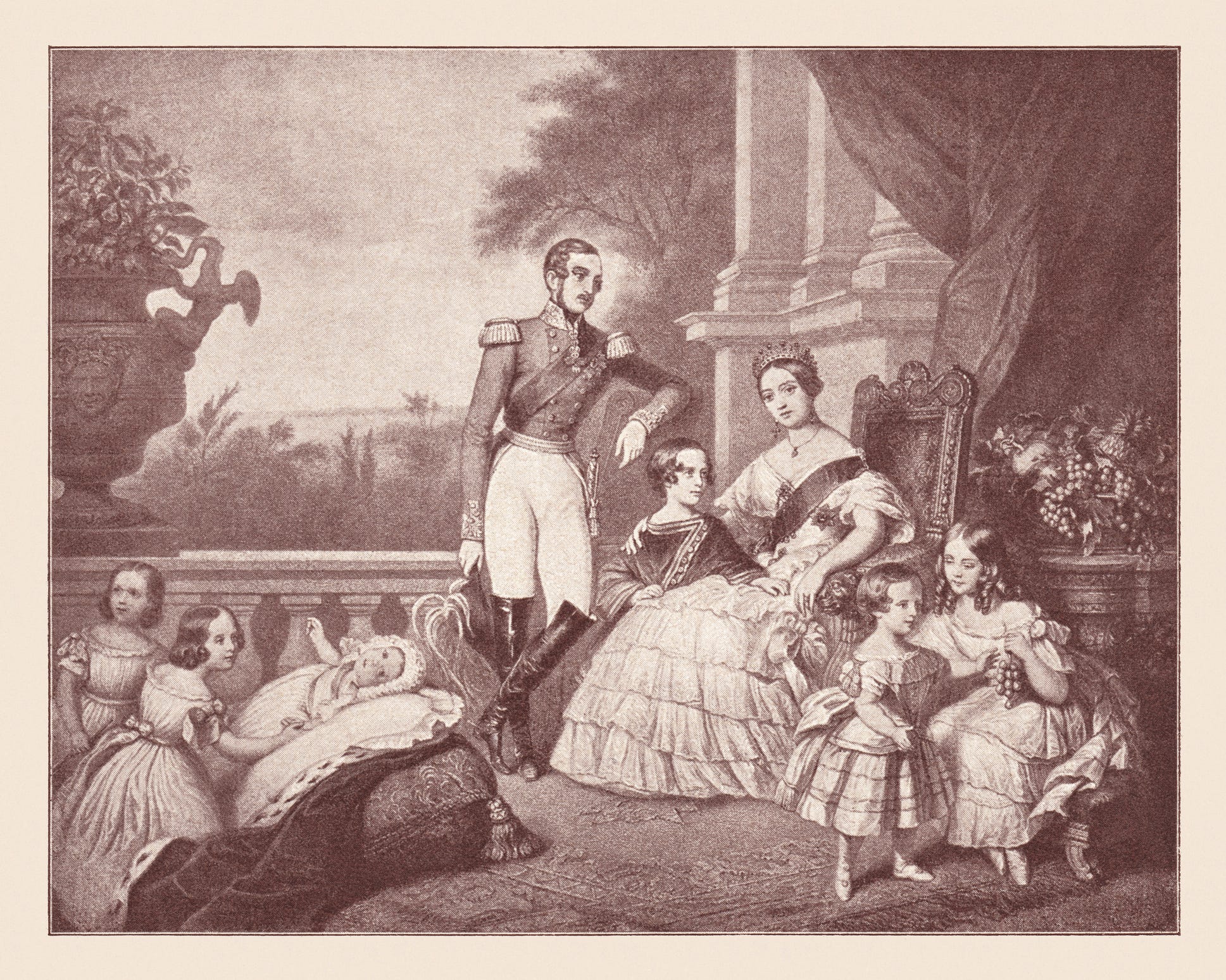
The most progressive parents in the United States are giving their children the most traditional names.
The latest baby name data from Washington, D.C., reads like a roll call of 19th-century senators and their wives. Lucy, Eleanor and Caroline for girls. Charles, John and George for boys. These are not the names you might expect from one of the most progressive cities in the country.
The same pattern exists in New York, where some of the most popular baby names include Charlotte, Emma, Henry and Theodore, according to newly released state name data.
Upper-middle-class professionals often talk a big game about openness, inclusion and social experimentation. They tend to say that people should be free to invent themselves. When psychologists Michele Gelfand and Jesse Harrington asked survey respondents in 2018 to list words that came to mind when they heard the word “rules,” upper-class respondents were more likely than others to write down negative words such as “bad,” “frustrating” and “constricting.”
They are wary of old rules and outdated hierarchies. Baby name experts told NBC News that ridiculing an unusual name can reveal “uncomfortable classism.” The unease suggests that even those who preach against the judgment know it is real.
So affluent parents opt for baby names such as Amelia, Isabella, James and Sebastian. They know that despite their professed openness, “safe” names tend to confer benefits in the real world.
Indeed, research has found that people with unusual or hard-to-pronounce names can face penalties. An analysis of 500 attorneys revealed that the harder an attorney’s name was to pronounce, the lower he or she was likely to be in the firm’s hierarchy.
People with options choose the safest ones for their own children, while praising risk and novelty for everyone else. They talk the ’60s and walk the ’50s.
I coined a term for this pattern: “luxury beliefs.” These are ideas that confer status on the affluent while imposing costs on people further down the socioeconomic ladder. Expressing a luxury belief raises your status. The costs fall on other people. And the people who espouse the belief are protected from those costs.
Most people who hold luxury beliefs are sincere. But there are also people who express these views for cynical reasons — to protect their reputations or advance their careers. They don’t necessarily believe what they are saying. But they know that saying it pays off. Just as some people buy expensive objects they don’t really like to impress their social circles, they may also espouse luxury beliefs.
Names fit the pattern. An educated professional in a blue city may say that all names are equally valid. Or she might go one step further and say that unconventional names should be celebrated. She might even go so far as to suggest that giving your child a traditional name is a sign of unoriginality or narrow-mindedness. Still, when the birth certificate arrives, she writes down Lucy.
J. Eric Oliver, a political scientist, has studied naming patterns and found that educated mothers tend to favor common, conventional names.
Unsurprisingly, educated liberal parents were more likely than educated conservative parents to choose unusual names.
However, such names were different from those favored by parents lower on the socioeconomic ladder. Less-educated mothers were more likely to invent new names or use unconventional spellings for familiar ones.
When affluent liberal parents choose unusual names, though, they tend to favor obscure cultural or literary references. Think of names like Esmé, Emerson or Archimedes. Oliver has argued that this is a way to demonstrate a “sense of cultural superiority.”
Similarly, economist Steven Levitt has said that “the primary purpose, when a parent gives a name, is to impress their friends that they are whatever kind of person that they want to be.”
Names move through the American class system in a downward migration pattern, akin to fashion. Popular names often begin among educated and affluent parents, then drift down the income ladder. Once they become common among less educated families, affluent parents abandon them.
This is consistent with other findings indicating that elites shape the social atmosphere in which others make choices. Studies have found that newspaper op-eds can change the minds of the general public and that messages from political elites can measurably shift public opinion. In other words, elites’ openly espoused views affect what other people see as normal, desirable or respectable.
This doesn’t mean elite parents sit around plotting class reproduction over brunch. Much of this behavior is instinctive. Parents want their children to be respected and welcomed. They want a name that could belong to a professor, a senator or a chief executive.
The claim that all names are equal is cheap when you are not living by it. The cost lands on parents with fewer resources who absorb the message and give their children names that employers, teachers and gatekeepers may treat differently. Affluent parents can praise unconventionality in public because they have already made the conventional choice in private.
The elite are not really post-traditional. They are selectively traditional. They reject old norms when rejection is fashionable and low-cost. They keep old norms when their own children’s futures are at stake.
By all means, choose the name you love. Our society should welcome children with every kind of name. But we should stop pretending that all names are treated the same. The most privileged parents in the U.S. have already shown us through their choices what they truly believe.
Here’s a video I did for The Washington Post, on the question of why the most progressive parents give their children the most traditional names.
In response to this article and accompanying video, some people have suggested that I use the term luxury beliefs too often, or that a particular example does not fit, or that one disputed example somehow invalidates the entire concept. They are all wrong.
Whenever I discuss luxury beliefs publicly, especially in a left-leaning outlet like The New York Times or The Washington Post, the response is unusually intense. The idea delights some people and enrages others. As a result, on the rare occasions when I discuss it, the idea tends to go semi-viral yet again. Then people who are unfamiliar with availability bias misunderstand what is transpiring on their feed.
As my regular readers know, the vast majority of my writing has nothing to do with luxury beliefs. For every ten times an editor invites me to write about the subject, I accept maybe once.
Luxury beliefs are ideas and opinions that confer status on the affluent while imposing costs on people lower on the socioeconomic ladder. You can disagree about whether a specific case belongs in the category. That does not negate the framework itself.
The concept generates so much energy because it captures something people recognize as real, even when they disagree about how it is applied in a particular case.
Consider an analogy to a related idea: conspicuous consumption. You can argue that, say, a destination wedding is not an example of conspicuous consumption. But rejecting that example does not mean conspicuous consumption does not exist. In the same way, disputing one luxury belief does not invalidate the broader phenomenon.
Most certainly a Destination Wedding is absolutely a form of conspicuous consumption. It's also an extraordinarily rude imposition on potential attendees (supposedly ones loves ones and friends) such that I'm shocked it is EVER tolerated. I knew it was a ridiculous concept upon first hearing of them around 30 years ago (in my 20s). And nothing ha changed that. A destination is not only conspicuous consumption. It is arrogance and selfishness in the extreme. All the time, every time.
Rob, excellent article and I particularly like your strong defence of Luxury Beliefs.