
This Summer's Sleeper Hit Is About A Man Who Can't Ask A Woman Out

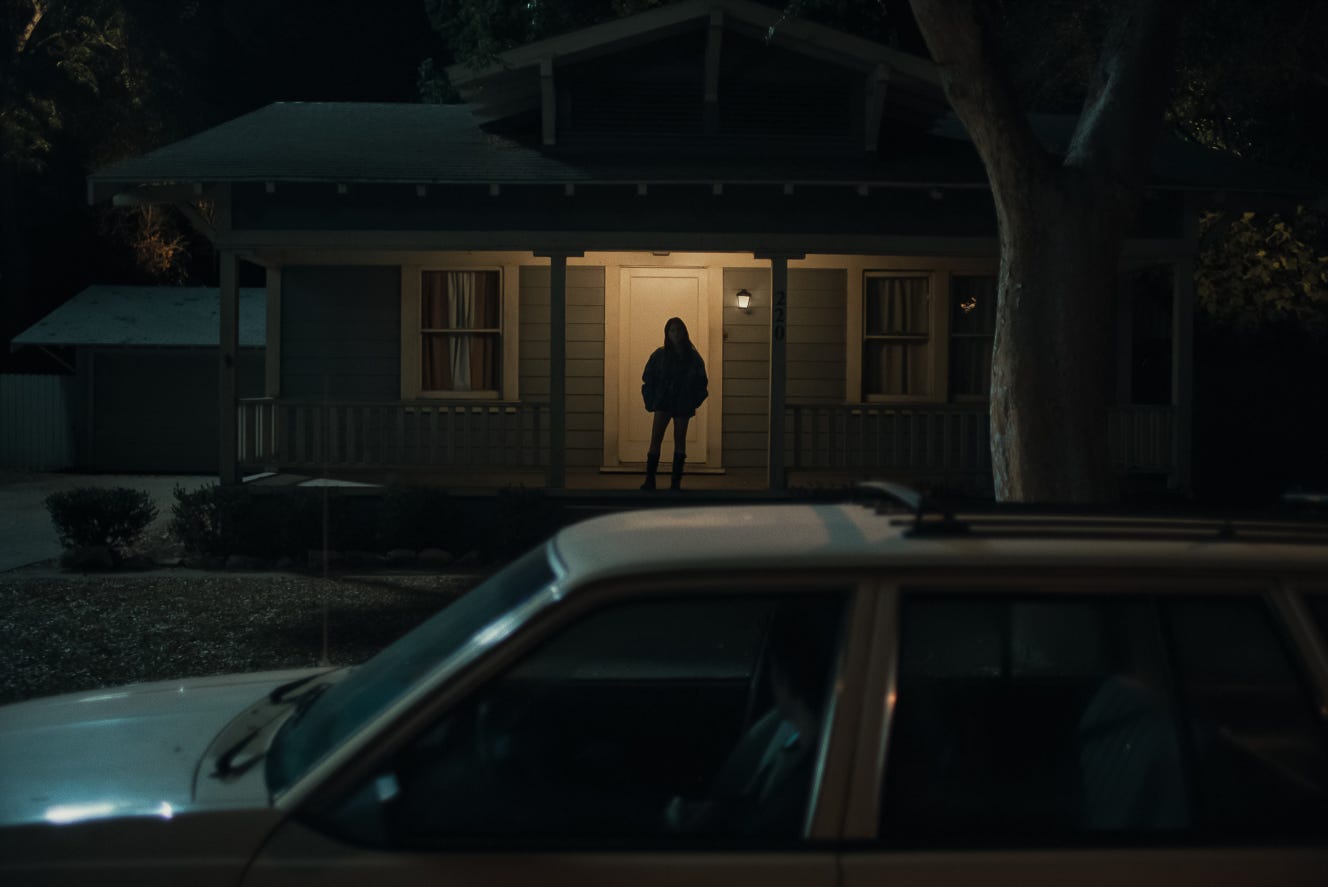
With a budget under $1 million, the thriller Obsession has earned more than $100 million in the US and more than $148 million in theatres worldwide. So far, it’s the sleeper hit of the summer.
But it is no shlocky horror flick. I saw it over the weekend and found it to be a surprisingly deep film. At heart, it’s a morality tale for today’s aggrieved young men — a story about male cowardice, female desperation and the nightmare of getting exactly what you asked for. A fitting fable for our social-media age.
First, you have to understand the idea that the film keeps circling around, one that has absolutely nothing to do with the supernatural: a man wants to be wanted more than he wants the object of his desire. It’s an idea that echoes the words of the looksmaxxing influencer “Clavicular”, who has said that knowing he could have sex with a woman is better than actually having sex with her.


In Obsession, a young man named Baron (nicknamed “Bear”) is obsessed with the beautiful, charismatic Nikki. He’s desperate to ask her out but he can’t find the words. Early on, she tells him that she has lost a necklace and she’s desperate for it back. So Bear goes into a shop to buy her a replacement. He then exits the shop with a gift for himself — a cursed trinket that promises to grant him a wish.
The perfect set-up.
Later, Nikki gives Bear an opening to tell her how he really feels about her — but he fails to do so. He can’t do it without knowing how she feels first. And so, out of pathetic desperation, Bear retrieves the “One Wish Willow” from his bag and wishes that Nikki will love him forever.
It works. Nikki becomes possessed and falls madly, horrifyingly in love with Bear. He gets what he wants, which means the wanting is over. And that’s where the horror begins.
Why would being loved to the point of obsession be so awful? Because real love requires the other person to be free.
The thing that makes Nikki worth loving was that she is autonomous, that she has the power to choose Bear. The wish strips all of that away. Nikki tells Bear that she will be “anything you want me to be”. This isn’t really a person worth wanting at all.
Bear (played by Michael Johnston) is also upset that his friends are growing sceptical of how much Nikki suddenly likes him. Although Bear wants to be wanted by Nikki, that’s not enough. He wants to be seen as the type of man who could be wanted by a woman like Nikki.
Eventually we learn that the real Nikki (played by Inde Navarrette) is still trapped in her now-possessed body. Every now and then she claws her way to the surface. In perhaps the film’s creepiest scene, she whispers, “Kill me, Bear. Please”. That is the real Nikki, awake for one second inside the puppet, begging to be put out of her misery. Bear hears her but he does nothing. He’d rather keep the terrifying and potentially murderous puppet that adores him alive instead of liberating the person who didn’t choose him of her own free will.
I notice that every time Nikki makes explicit or implicit requests of Bear, he always fails to give her what she wants: “Tell me whether you actually like me. Replace my necklace. OK, now I’m possessed and I want you to love me. OK, now I’m trapped in my own body and this is a nightmare, please kill me.”
Bear declines each time.
At one point, the possessed Nikki screams at Bear “Tell me you love me!” and Bear screams back, under duress, “I love you!” Recall that early in the film Bear couldn’t say he liked Nikki until she said she liked him first.
The film portrays Bear as a weak and pathetic man from the very beginning. He doesn’t have the courage to ask Nikki out, even when Nikki directly gives him the chance to do so. Bear’s internal frailty appears again when he is trying to decide how he should kill himself. He picks up a gun but backs out, opting to swallow a handful of pills instead.
You keep thinking: if Bear had simply told Nikki he liked her right from the start, none of this would have happened. The main male character of this film was more terrified of asking a woman out than he was of being in a relationship with a murderous woman who feeds him his own cat.
According to research project DatePsychology, more than half of men aged 18 to 25 have not once gone up to a woman to ask her out in the past year, even though three quarters of women the same age say they want to be approached more often. Which is probably why this film could only be made by a 26-year-old Gen Zer who fears what will happen when men fail to act and resort to dreams and wishes and magical fantasies.
The lesson of the movie? If you like someone, just ask them out.
A version of this article was published by the Times of London under the title “Why every young man should fear Obsession’s message.” It is a modified version of a Substack essay I shared last week.